Jump to section
The short answer
- Peas can cause gas because they contain fermentable carbohydrates that gut bacteria break down in the large intestine.
- Garden peas, including petit pois, contain carbohydrates such as galacto-oligosaccharides (GOS), which may contribute to wind and bloating in sensitive individuals.
- Fresh and frozen peas have similar nutritional characteristics. Freezing doesn't reliably remove the carbohydrates responsible for gas.
- Mangetout and sugar snap peas have different FODMAP profiles from garden peas, so you may tolerate one variety better than another.
- Split peas and mushy peas are made from mature dried peas, which contain fermentable carbohydrates such as GOS.
- Portion size matters. A small serving may be comfortable, while larger amounts can cause symptoms in some people.
Peas are a familiar part of British meals, whether served alongside a Sunday roast, stirred into pasta or enjoyed as mushy peas with fish and chips.
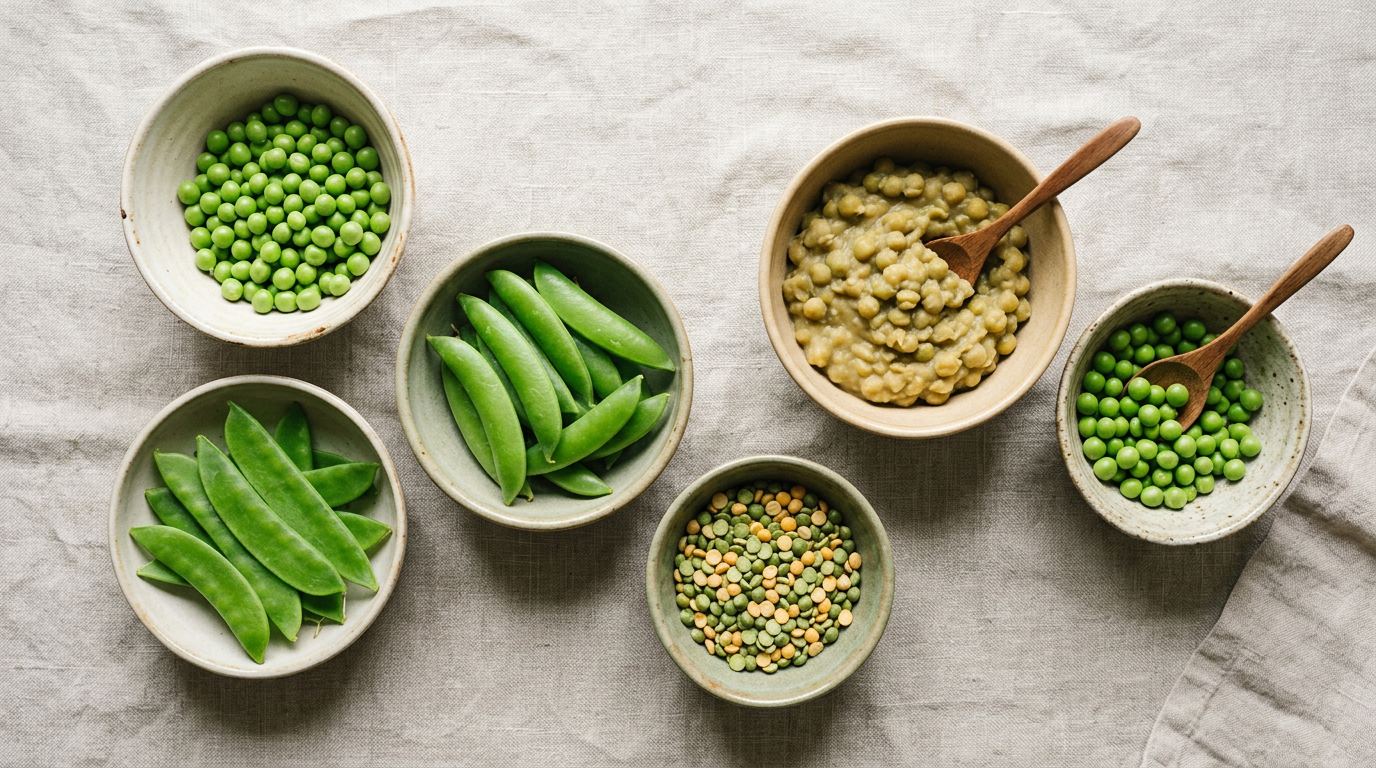
But not all peas are the same. Garden peas, mangetout, sugar snap peas and split peas differ in their composition, and these differences can affect how they're digested.
If you've noticed that garden peas agree with you but mangetout leaves you bloated, there may be a reason. Understanding the type of pea, its fermentable carbohydrate content and your usual portion size can help you identify what works for your digestion.
Why do peas make you fart?
Peas can cause farting or trapped wind because they contain fermentable carbohydrates that aren't fully digested in the small intestine.
One group is galacto-oligosaccharides (GOS), which are also found in foods such as chickpeas, lentils and beans.
Humans don't produce the enzymes needed to break down GOS completely. Instead, these carbohydrates pass into the large intestine, where gut bacteria ferment them.
Fermentation produces gases, including hydrogen and carbon dioxide. Some people notice increased wind, abdominal pressure or bloating as a result.
This is a normal part of digestion and doesn't mean that peas are damaging your gut.
However, people differ in how much gas they produce and how sensitive they are to it. Someone with IBS, for example, may experience discomfort from intestinal stretching that another person barely notices.
Our articles on why chickpeas make you fart and why beans make you fart explain this fermentation process in more detail.
Customer reviews
3,373
verified reviews
4.7
average rating
Showing 2 of 3,373 reviews
Newest first · verified buyers only · unfiltered
Really easy to take, great flavour and mixes well
Great taste and consistency. Packed with everything I was looking to supplement
No matching reviews shown here. Read all reviews
Do garden peas cause more gas than other vegetables?
Garden peas can contribute to more gas than some lower-FODMAP vegetables, particularly when eaten in larger portions.
Unlike many other green vegetables, garden peas are the immature seeds of a legume plant. They contain carbohydrates such as GOS and fructans, which may be fermented by gut bacteria.
This makes their digestive effects somewhat different from vegetables such as carrots or green beans, which are generally lower in FODMAPs.
However, there's no reliable way to predict how much gas a particular food will cause in every person.
Garden peas also provide fibre, plant protein and a range of vitamins and minerals. They can form part of a varied, balanced diet and count towards your 5-a-day.
If you enjoy peas but notice discomfort after a large serving, try reducing the quantity rather than cutting them out altogether.
Are frozen peas worse than fresh?
Frozen peas aren't inherently more likely to cause gas than fresh peas.
Freezing is a preservation method that helps maintain the quality of vegetables. It doesn't reliably eliminate fermentable carbohydrates such as GOS, so there's no strong reason to expect frozen peas to be consistently easier or harder to tolerate.
There may be some variation in carbohydrate composition between pea varieties and products, but this doesn't establish a meaningful difference in bloating risk between fresh and frozen peas.
Portion size and individual tolerance are likely to be more useful considerations.
Frozen peas are also convenient, affordable and nutritious, making them a practical way to include vegetables in your diet.
Do mangetout and sugar snap peas cause gas?
Yes, mangetout and sugar snap peas can cause gas or bloating in some people, although their FODMAP profiles differ from those of garden peas.
Mangetout, also known as snow peas, are eaten with their flat, immature pods. They can contain mannitol, a type of fermentable carbohydrate known as a polyol.
Mannitol isn't completely absorbed in the small intestine. It can draw water into the gut, and some may reach the large intestine, where bacteria ferment it.
This can contribute to bloating, wind or abdominal discomfort in people who are sensitive to polyols.
Sugar snap peas are sweeter, with thicker, rounded pods. Their FODMAP profile can differ from mangetout, with fermentable carbohydrates such as excess fructose potentially contributing to symptoms.
This distinction matters because someone who is sensitive to one FODMAP group may tolerate another group differently.
For example, you might find garden peas comfortable but experience symptoms after mangetout, or the other way around.
However, the exact FODMAP content and serving thresholds depend on the food tested. Consult the Monash University FODMAP Diet app for current guidance rather than assuming all edible-pod peas have the same threshold.
Do split peas and dried peas cause more gas?
Split peas can contribute to gas because they contain GOS and other carbohydrates that may be fermented by gut bacteria.
Unlike garden peas, which are harvested while immature, split peas are mature peas that have been dried, with their outer skins removed and the seeds split.
Dried split peas are commonly used in soups, stews and dhal-style dishes.
Because drying removes water, dried peas contain more concentrated nutrients and carbohydrates by weight. However, the amount consumed after soaking and cooking is more relevant when considering digestive symptoms.
A large bowl of split pea soup may provide a substantial amount of fermentable carbohydrate, particularly if it also contains onion or garlic.
This doesn't mean split peas should be avoided. They provide plant protein and dietary fibre and can be a useful addition to a balanced diet.
If you aren't used to eating pulses regularly, try introducing smaller servings and gradually increasing the amount.
Do mushy peas cause gas?
Mushy peas can cause gas or bloating in some people because they're typically made from dried marrowfat peas, which contain fermentable carbohydrates.
Marrowfat peas are mature peas that have been dried and then soaked and cooked until soft.
Like other dried pulses, they contain GOS, which can reach the large intestine and be fermented by gut bacteria.
Portion size can also make a difference. A small spoonful of mushy peas may be comfortable, while a large serving could contribute to more gas in someone with sensitive digestion.
It's also worth considering the rest of the meal.
Mushy peas are often served alongside chips, battered fish or other fried foods. Higher-fat meals can slow gastric emptying and contribute to feelings of fullness or discomfort, although this isn't the same as gas produced through fermentation.
If mushy peas seem to cause bloating, consider the serving size and accompanying foods rather than assuming they're the only cause.
Does soaking, rinsing or cooking peas help?
Soaking, cooking and rinsing can reduce some fermentable carbohydrates in dried or tinned pulses, although the extent of the reduction depends on the food and preparation method.
GOS are water-soluble, meaning some can pass into soaking or cooking water.
For dried split peas, soaking them where recommended, discarding the soaking water and cooking them thoroughly may reduce some of these carbohydrates.
Similarly, draining and rinsing tinned pulses can remove some carbohydrates that have passed into the surrounding liquid.
However, these methods don't necessarily remove all FODMAPs, and the effect varies between products.
Cooking also softens peas, making them easier to chew, but it doesn't guarantee they won't cause gas.
For more information about why preparation methods matter, see our guide to why baked beans make you fart.
How many peas is too many?
There's no single amount of peas that causes gas for everyone.
The amount you tolerate depends on the type of pea, its FODMAP content, what else you eat and your individual digestive sensitivity.
A standard adult portion of cooked garden peas is approximately 80g, or three heaped tablespoons, according to NHS 5-a-day guidance.
However, a normal vegetable portion isn't necessarily the same as a low-FODMAP serving. Some people following a low-FODMAP diet may need smaller quantities of certain peas.
If you find that peas regularly cause wind or bloating, try reducing the portion and observing how you feel.
You can then gradually increase the amount if comfortable, rather than excluding them entirely.
Peas provide useful nutrients, including fibre, so unnecessarily avoiding them could reduce the variety of plant foods in your diet.
Our article on whether too much fibre can cause constipation explains why increasing fibre gradually may help with digestive comfort.
A quick comparison of pea types
Different types of peas contain different fermentable carbohydrates, so their effects on digestion can vary.
The table below outlines potential contributors to gas and bloating. These aren't rankings of bloating risk, and individual tolerance varies considerably.
| Type of pea | Potential trigger | What to know |
|---|---|---|
| Garden peas / petit pois | GOS and other fermentable carbohydrates | Portion size may influence symptoms |
| Frozen garden peas | Similar carbohydrates to fresh garden peas | Freezing doesn't reliably remove FODMAPs |
| Tinned garden peas | Fermentable carbohydrates; amount varies | Draining and rinsing may reduce some water-soluble carbohydrates |
| Mangetout / snow peas | Mannitol | A polyol; may cause symptoms in sensitive individuals |
| Sugar snap peas | Fermentable carbohydrates, potentially including excess fructose | FODMAP profile differs from garden peas and mangetout |
| Split peas | GOS | Dried pulse; cooking method and serving size matter |
| Mushy peas / marrowfat peas | GOS; portion size | Usually made from soaked and cooked dried peas |
| Pea protein powder | Varies with processing and formulation | Cannot automatically be assumed low FODMAP |
What to do if peas make you gassy
If peas regularly leave you feeling gassy or bloated, you don't necessarily need to remove them from your diet.
A few practical changes may help you identify which types and serving sizes work best.
- 01
Start with a smaller portion. Try reducing the amount of peas you eat and see whether this changes your symptoms.
- 02
Compare different varieties. Garden peas, mangetout and sugar snap peas have different FODMAP profiles, so you may tolerate them differently.
- 03
Prepare dried peas carefully. Follow soaking and cooking instructions, and discard soaking water where appropriate.
- 04
Drain and rinse tinned peas. This may help reduce some water-soluble carbohydrates.
- 05
Increase fibre gradually. If you're adding more peas, beans or lentils to your diet, introduce them steadily rather than making a sudden change.
- 06
Keep a food and symptom diary. Record the type of pea, portion size and other foods eaten alongside it.
- 07
Speak to your GP if gas or bloating is persistent, painful or accompanied by unexplained weight loss, blood in your stool or a change in bowel habits.
For most people, peas can remain part of a varied, balanced diet. Understanding how different varieties affect your digestion may be more useful than avoiding peas altogether.
For a broader look at how different foods can affect digestion, read our guide to the 6 worst foods for gut health and why balance matters most.
FAQs
Are peas high FODMAP?
Many types of peas contain FODMAPs, but the type and amount vary. Garden peas and split peas contain fermentable carbohydrates such as GOS, while mangetout can contain mannitol.
Smaller servings may be better tolerated, but the relevant thresholds differ by variety. Check the Monash FODMAP Diet app for current serving guidance.
Why do peas make me gassy but not other vegetables?
Peas contain fermentable carbohydrates that may be present in smaller amounts in other vegetables.
For example, GOS in garden peas can reach the large intestine, where bacteria ferment it and produce gas. Individual sensitivity also matters, so two people may respond differently to the same serving.
Do tinned peas cause less gas than frozen peas?
Not necessarily. Some water-soluble fermentable carbohydrates may pass into the liquid surrounding tinned peas, and draining and rinsing can remove part of that liquid.
However, this doesn't establish that all tinned peas cause less gas than frozen peas. The variety, serving size and individual tolerance still matter.
Are pea protein powders gassy?
Pea protein powders can cause digestive discomfort in some people, but their FODMAP content varies considerably.
Protein isolation may remove some fermentable carbohydrates, although this depends on the manufacturing process. Monash University has found substantial differences between pea protein products, so pea protein isolate shouldn't automatically be assumed low FODMAP.
Do peas cause bloating as well as wind?
Yes. Fermentation of carbohydrates such as GOS can produce gas, which may contribute to both wind and bloating.
However, bloating isn't always caused by excessive gas. Individual sensitivity, meal size and other digestive factors can also contribute.
Should I stop eating peas if they make me gassy?
Not necessarily. Occasional wind after eating peas doesn't automatically indicate a problem.
Try smaller portions or different varieties before eliminating them. If symptoms are frequent, severe or affecting your quality of life, speak to your GP. A registered dietitian can also help you explore dietary triggers without unnecessary restrictions.
Sources and further reading
- Monash University FODMAP. About FODMAPs and IBS — explanation of FODMAPs, fermentation and digestive symptoms.
- Monash University FODMAP. High and low FODMAP foods — FODMAP categories and legumes, including split peas.
- Monash University FODMAP. Monash FODMAP Diet app — current serving sizes and FODMAP classifications for different pea varieties.
- Monash University (2024). Pea Protein and the Low FODMAP Diet — laboratory findings showing variation in the FODMAP content of commercial pea protein products.
- Muir JG, Rose R, Rosella O, et al. (2009). Measurement of short-chain carbohydrates in common Australian vegetables and fruits by high-performance liquid chromatography. Journal of Agricultural and Food Chemistry, 57(2):554–565. PubMed
- Yao CK, Tan HL, van Langenberg DR, et al. (2014). Dietary sorbitol and mannitol: food content and distinct absorption patterns between healthy individuals and patients with irritable bowel syndrome. Journal of Human Nutrition and Dietetics, 27(Suppl 2):263–275. PubMed
- Fleming SE (1981). A study of relationships between flatus potential and carbohydrate distribution in legume seeds. Journal of Food Science, 46(3):794–798. DOI
- Njoumi S, Amiot MJ, Rochette I, et al. (2019). Soaking and cooking modify the alpha-galacto-oligosaccharide and dietary fibre content in five Mediterranean legumes. International Journal of Food Sciences and Nutrition, 70(5):551–561. PubMed
- NHS. 5 A Day portion sizes — adult vegetable serving sizes, including peas.
- NHS. Bloating — symptoms and when to seek medical advice.

About the author
Holly Caske, ANutr
Holly is a Registered Associate Nutritionist (ANutr) writing on nutrition and digestive health for Biomel, translating research into something you can actually use on a Tuesday evening.
Reviewed by Dr Daniel Sheridan, PhD, MSc, BSc · Last reviewed